10 Warning Signs You May Need Periodontics
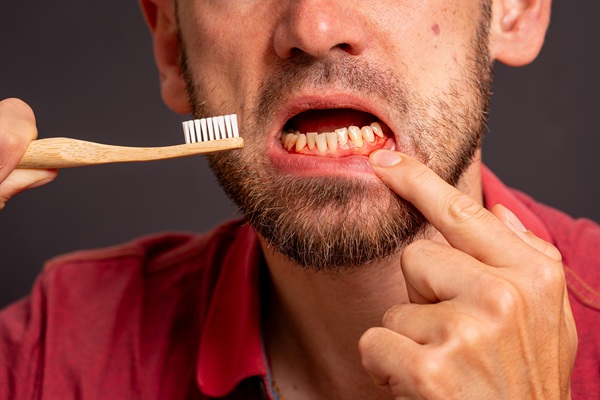
Healthy gums support a strong, beautiful smile. Should gum irritation, inflammation, and disease occur, professional gum care or periodontics can help stop them in their tracks. A general dentist typically provides first-line periodontal care but can also refer patients out to a specialist as needed. This proactive approach strives to help your smile stay healthy for many years to come.
Why gum health matters
Healthy gums reinforce the smile’s foundation: the tooth roots and the jawbone. When the gums are healthy, they fit snugly around each tooth and protect the supporting bone. This natural seal also prevents bacteria from irritating the deeper layers of the jaw, which could lead to issues such as tooth loss, a shrinking jawbone, and changes in the natural shape of the face. Therefore, prioritizing gum health is a positive step toward avoiding complex dental procedures, such as tooth replacement.
The gums also serve as a frame for the smile. When they are pink and healthy, the smile often looks more aesthetically pleasing. The good news is that, even when problems arise, periodontics can prevent gum issues from affecting the long-term health and appearance of the smile.
10 signs your smile may need periodontics
The body has ways of signaling when the gums need a little extra attention. During a dental checkup, a general dentist looks for any signs of gum problems. Here are 10 of the most common that may signal the need for periodontics:
- Gums that bleed or appear red when brushing or flossing
- Gums that look slightly puffy or feel more tender than usual
- Chronic bad breath, even after brushing
- Teeth that look longer due to shifting gums
- A feeling that a tooth is not as stable as it was in the past
- A slight change in how it feels to bite down on food
- The presence of unusual spots or sensitivity between the teeth
- New gaps or spaces where food tends to get caught
- A shift in the way the upper and lower teeth meet together
- A partial or full denture that feels like it needs an adjustment
Addressing these signs early with periodontics helps a smile stay bright and functional. On the other hand, ignoring these indicators can lead to more significant structural concerns over time. That is why patients are also encouraged to watch out for these signs between checkups.
A look at periodontics in action
Basic periodontics for bleeding, swollen gums
Perhaps the most common sign to ask a dentist about periodontics is when the gums bleed while flossing or brushing. This could signal early-stage gum disease (gingivitis); however, it may simply indicate that the gums need more consistent care. Either way, the gumline is likely irritated by plaque and tartar buildup. Swelling is another way the body attempts to protect itself from this irritation.
To address bleeding and swollen gums, a dentist can remove any buildup with a deep cleaning called scaling and root planing. This periodontal cleaning involves scaling any buildup from the tooth roots, then smoothing the roots so the gums can reattach easily. With professional care and more consistent flossing, the gums should return to a pink and firm state. Most patients find that the mouth feels much more refreshed and comfortable soon after a deep cleaning.
Periodontal care for chronic bad breath
Breath that does not feel fresh often results from bacteria hiding below the gumline. Again, scaling and root planing reach these areas, leaving the mouth feeling much cleaner. This process also helps the gum tissue stay tight and protective around the roots of the teeth. Maintaining this connection helps keep a smile stable and comfortable.
If deeper infection or ongoing inflammation is present, treatment may go beyond scaling and root planing. A referral to a periodontist may be necessary for advanced care designed to reduce pocket depth, control harmful bacteria, and protect the bone and tissue that support the teeth.
The gums, tooth stability, and denture fit
Healthy gums do much more than frame the smile. As mentioned, they help protect the bone and connective tissues that support natural teeth. They also support the shape of the mouth, allowing dentures to fit comfortably. When gum disease becomes more advanced, the gums and underlying bone can gradually break down, which may lead to loose teeth, shifting bite patterns, or dentures that no longer feel as secure as they once did.
This is a common example of when a dentist and a periodontist work together. The periodontist can rebuild the gums, such as with gum grafts, while the dentist can fit the patient for a new denture. The dentist can also help maintain the treated gums through regular dental checkups.
Ask a general dentist about your gum health
Have you noticed problems with your gums? Whether they are bleeding or changing in shape, it is recommended to consult a dentist. They can provide basic periodontal care or, in more complex cases, refer the patient to a specialist. Schedule an appointment at our McKinney office today.
Request an appointment here: https://www.yourdowntownmckinneydentist.com or call Sam Patel DDS, PA at (972) 638-5848 for an appointment in our McKinney office.
Check out what others are saying about our dental services on Yelp: Periodontics in McKinney, TX.
Related Posts
Periodontics and dental implants are two areas of dentistry that often go hand in hand. Both of these treatments are important for helping to preserve the health and beauty of your smile. While periodontics is focused on treating diseases of the gums and bone, dental implants are focused on replacing lost teeth with artificial ones.…
Although it may not seem like it, a person's gum health is vital for the health of his or her entire body. The gums are not only soft tissue as they have a bone structure under them. Gums are meant to keep peoples' teeth securely in their mouths. When a person's gums are not healthy,…
Periodontics is the branch of dentistry that deals with the supporting structures of teeth. Gum disease is a bacterial infection, and without periodontics treatment, it can potentially result in tooth loss because it compromises the structures supporting the teeth. Therefore, dentists usually check for early warning signals that patients may miss. Periodontal treatment may be…
According to the American Academy of Periodontology, periodontics is a dental specialty that focuses on the prevention, diagnosis, and treatment of gum disease. When periodontal disease (also known as gum disease) develops, usually because of poor oral hygiene practices, the harm is not just to your gums but also to your general health. Continue reading…